
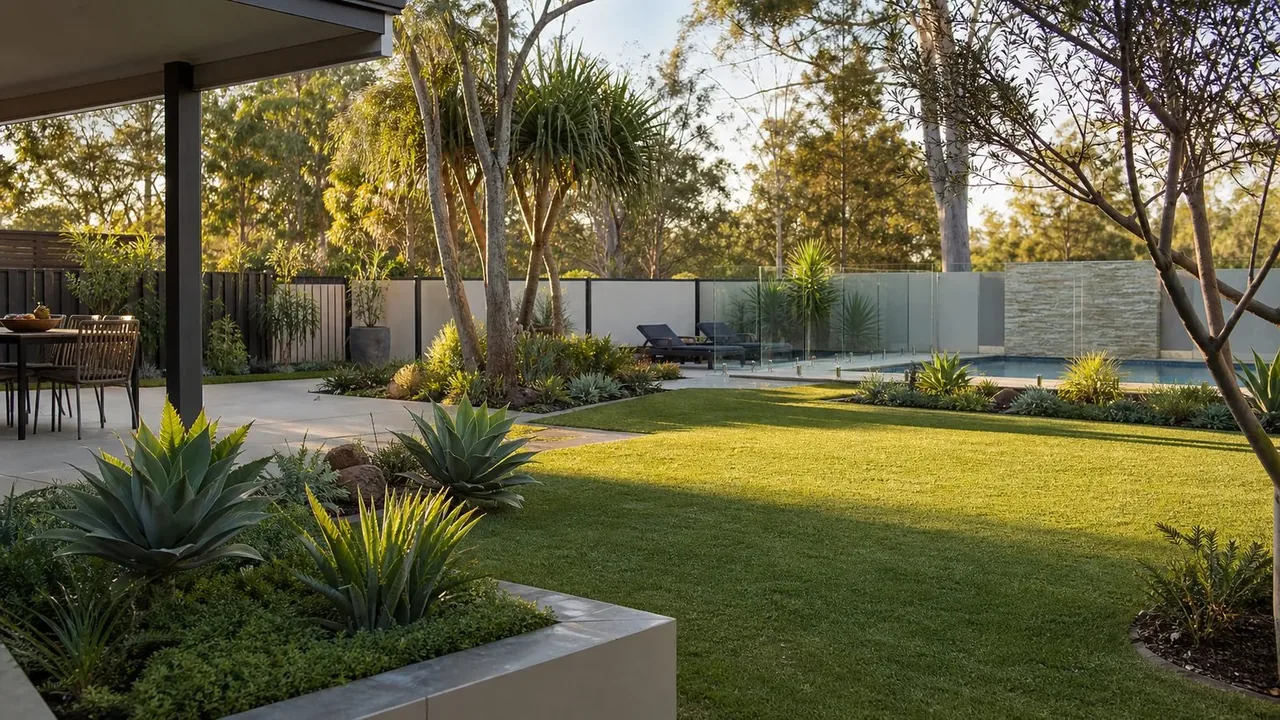
Watch the routes your dog already chooses
Observe the garden during ordinary use rather than arranging it for a photograph. Mark where your dog runs from the door, patrols a boundary, turns sharply, rests and toilets. Record whether the same route is used repeatedly or whether activity moves with people and sunlight. A worn line across the lawn can reveal a regular journey that a formal path layout has ignored. Do not assume the answer is a tougher lawn everywhere. Sometimes the practical design response is to accommodate a route and protect a separate area where plants need time to establish.
Include household routines in the map. Where do you stand to put on a lead? Can you carry washing through without opening the main gate? Where is waste collected and where can cleaning tools be stored securely? For a smaller Pakenham backyard, these movements may overlap substantially. Identify the conflicts before buying new surfaces. The plan should also consider the dog's size, mobility and known habits without treating breed labels as a complete description. If behaviour changes suddenly or raises welfare concerns, discuss that with a veterinarian or appropriately qualified behaviour professional. Landscaping can support routines, but it is not a substitute for health care, exercise or behavioural support.
Create distinct places for activity and rest
A garden works better when energetic movement does not pass through every planting bed or resting area. Consider whether the main running route can remain open while quieter planting occupies less disturbed pockets. Keep turns and approaches free of sharp projections, unstable objects and narrow traps. A feature that looks harmless when someone walks past may be poorly placed where a dog regularly accelerates or turns. Trial the arrangement with movable markers and supervision before constructing permanent edges. Avoid placing fragile pots at the point where the dog always changes direction.
Resting areas need assessment throughout the day, not just when the design visit occurs. Check how shade moves and whether the dog can choose a comfortable sheltered location with access to fresh water. Do not assume a surface remains comfortable because it was cool during a morning sample inspection. Ask about its performance under the actual sun exposure and retain alternatives the dog can use. Shelter, water and safe containment are ongoing care responsibilities rather than optional decorative features. The landscape brief should state where these functions sit and how they remain available while work is under way, including temporary arrangements during demolition or surface preparation.
Choose surfaces by cleaning, movement and exposure
This decision is more specific than choosing between natural and synthetic lawn. A dog garden may contain a running area, a toileting area, a resting area and a service route, each with different demands. Compare how each surface handles repeated turning, how waste can be removed and how the underlying construction deals with water. Ask to inspect a representative sample and the maintenance instructions. A label such as pet friendly does not explain the whole system. The base, edges, joins and cleaning access can matter as much as the visible surface.
For synthetic turf, ask how the complete installed system is intended to be cleaned and maintained, including the base and any specified infill. Do not accept a promise that the surface will never smell or need maintenance. For natural lawn, discuss opportunities to rest damaged sections and whether the actual light and traffic support recovery. Loose materials require assessment against the particular dog's habits, including digging or picking up objects. Keep surfaces stable and transitions easy to negotiate. The best choice may differ between areas of the same garden. Record those differences in the brief rather than asking one material to solve every use case.
Check planting and garden products with care
Identify existing plants before assuming that an established garden is suitable for a dog. Include fallen fruit, seeds, berries and accessible plant material in the review. Use reliable pet safety information and veterinary advice where identification or risk is uncertain. The RSPCA's garden guidance highlights hazards from some plants, baits and garden materials. That does not mean every ornamental plant is unsuitable, but it does mean a generic nursery label is not enough to establish safety for a pet that chews or eats garden material. Keep unknown items out of reach while they are being assessed.
Store fertilisers, pesticides, cleaning products and tools securely, and follow product labels and appropriate professional advice. Do not rely on a product being described as natural to decide it is safe for a dog. Ask the landscaping contractor to provide the actual product and plant names, including materials proposed for mulch or surface maintenance. Review these before application rather than trying to reconstruct them after the garden is finished. Keep pets away from work areas and newly treated surfaces for the conditions specified by the relevant product or professional. This page does not diagnose poisoning or give treatment instructions; suspected exposure or illness needs prompt veterinary advice.
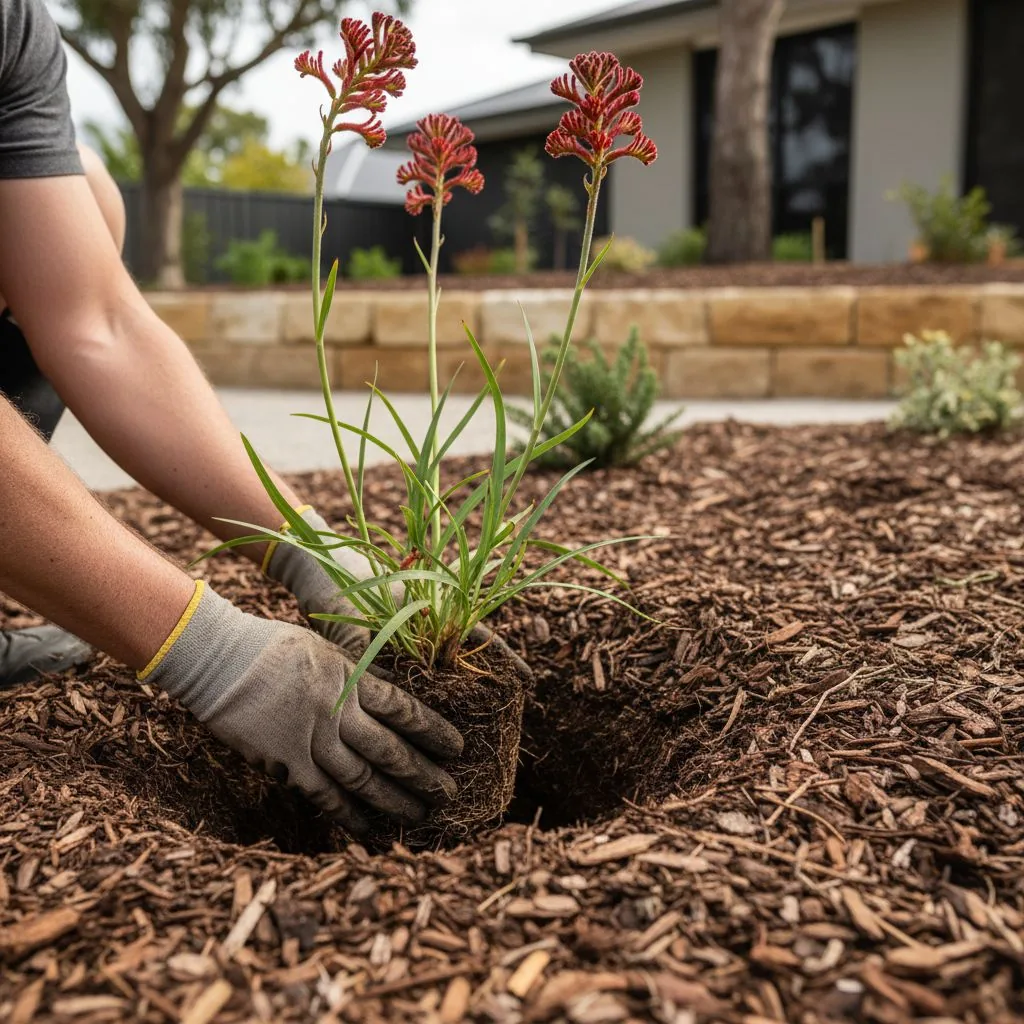
Design cleaning and containment into daily use
A toileting area needs convenient access for waste collection and a maintenance method compatible with the surface. Put storage for collection supplies where it can be reached without crossing a muddy bed, while keeping products and waste containers secure. Think through what happens during rain and how cleaning water is managed. Do not direct wash water toward neighbouring property or assume an existing drain is an appropriate destination. Ask for a site-specific explanation where the design depends on drainage or plumbing. Making the cleaning routine easy is often more useful than hiding the area behind dense planting.
Check gates, latches and boundaries as part of the overall plan, particularly where excavation or new surface levels could alter gaps. A landscaper should identify work that requires the relevant fencing or other trade rather than assume planting provides containment. Do not leave a pet loose while gates are repeatedly opened for deliveries. Agree a separate secure area or off-site arrangement during the work. Review access for visitors and household members as well: a gate that is awkward to operate is more likely to be left open. The practical test is whether normal routines can happen without defeating the containment arrangement or forcing the dog through the active work zone.
A hypothetical garden with a worn boundary route
Imagine a Pakenham household whose dog repeatedly follows the fence from the back door to a viewing corner. New plants placed along that line are flattened and a narrow lawn strip wears away. The owners initially ask for the strongest possible lawn. Observation shows that repeated turning at the corner is the main wear point, while the centre of the yard remains in better condition. The design conversation therefore considers a defined route, a clearer turn and planting outside the habitual movement line. The household also records where the dog rests during different parts of the day.
In this hypothetical example, the brief separates the movement route from a protected planting pocket and a manageable toileting area. Surface choices remain subject to the dog's habits, exposure and cleaning requirements. A trial with movable markers lets the household check the new route before permanent edges are built. A more useful quote describes the different zones and their maintenance than simply offering one surface across the whole yard. The household can then assess whether the arrangement suits everyday use before committing to permanent edges or expensive materials.
Avoid promises that a garden cannot deliver
No landscaping material makes a garden universally dog-proof. Repeated concentrated use can affect lawns, planting and surfaces, while individual dogs interact with materials differently. Ask what maintenance the proposed design assumes and who will perform it. If a lawn requires rest periods but there is no alternative exercise or toileting area, that assumption needs attention. If synthetic turf requires a cleaning routine, confirm you can actually carry it out with the available access and products. Choose around realistic household capacity rather than a maintenance-free description.
Another mistake is using planting to hide every boundary without considering the dog's movement or the need to inspect fences. Leave access for checks and repairs. Avoid sharp edging or unstable decorative objects near habitual running lines. Do not cover an unresolved wet area and expect a pet surface to remain pleasant to use. Water movement and base conditions belong in the scope before the visible finish. Finally, do not introduce every new zone at once without supervision. The household needs a practical transition plan while plants establish and the dog learns the changed arrangement. Ask a qualified professional for behavioural help if the design alone cannot address the underlying difficulty.
Prepare a brief based on your actual dog
Bring a marked plan of the dog's routes, resting places and toileting area, together with photographs of wear and the gates. Describe known digging, chewing or escape behaviours factually. Include mobility needs and any relevant advice from your veterinarian or behaviour professional without expecting the landscaper to provide medical assessment. State how much cleaning and garden maintenance your household can sustain. Mark existing plants that need identification and products that must be reviewed before use. This gives the design discussion concrete constraints instead of relying on the phrase dog friendly to mean the same thing to everyone.
Ask the quote to separate surface construction, planting, irrigation, drainage assessment and containment work. Request actual material names and care instructions, plus the temporary pet arrangement during construction. At handover, walk the edges, gate approaches and maintenance routes before allowing unsupervised access. Check that tools, offcuts and unused products have been removed from the area. Keep the final plan and maintenance information where all household members can find them. Review how the dog uses the space after the change and adjust movable elements where necessary. The aim is a garden that supports safe routines and manageable care, with clear limits about what the landscape can and cannot solve.