
Mulch and garden soil in Pakenham: how much to order and what to choose
One cubic metre of mulch spread 50 millimetres deep covers 20 square metres, so a bed measured wrongly means a second delivery or a pile left on the driveway. This guide shows how to work out quantities, which material suits which bed and what to ask a Pakenham supplier.
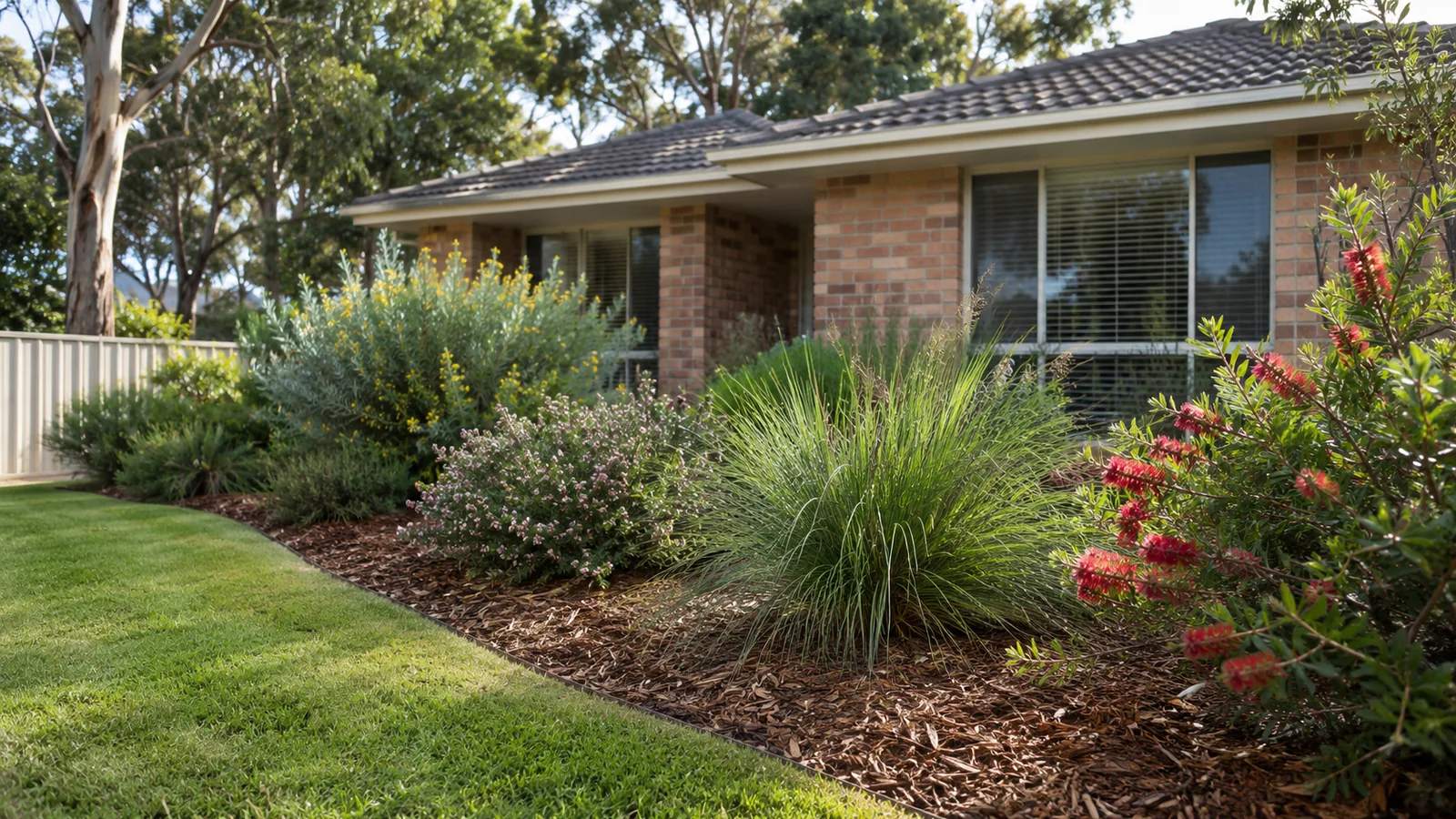
Measure each bed in square metres, pick a depth for the material, then convert to cubic metres. Order a little extra to allow for settling.
Bark suits most beds, straw and sugar cane break down faster, and stone adds no organic matter. Keep mulch clear of stems and trunks, and check bed drainage before adding soil.
How much mulch or soil do I need to order?
Suppliers sell by the cubic metre. A bed is measured in square metres, so you need to multiply the area by the depth, in metres, to get the volume.
Work through it in three steps. Measure the length and width of each bed and multiply them, adding the beds together. Choose a depth for the material you are buying. Multiply the total area by that depth. A 15 square metre bed at 50 millimetres deep needs 15 x 0.05 = 0.75 cubic metres.
| Depth | Area one cubic metre covers |
|---|---|
| 30 mm | About 33 square metres |
| 50 mm | 20 square metres |
| 75 mm | About 13 square metres |
| 100 mm | 10 square metres |
Curved beds, slopes and old mulch that has not yet broken down all change the answer. Mulch also settles after rain, so many people order a little over. If the bed already has a layer, measure what is there and top up only to the depth you want.
Soil follows the same sums. If you are filling a raised bed, multiply the length, width and height. Ask the supplier to confirm how their trucks measure a load, since loose material is often sold by volume before it settles.
Which mulch suits which garden bed?
There is no single best mulch. The choice depends on how long you want it to last, whether the bed is windy, and whether the plants need organic matter in the soil.
| Material | Suits | Watch for |
|---|---|---|
| Bark or wood chip | General beds and trees | Low in nitrogen, so add a plant food first |
| Pea straw or sugar cane | General and vegie beds | Breaks down fast, sugar cane can blow away |
| Pine needles | Acid-loving plants | Not for every plant |
| Stone or gravel | Paths, pots, feature areas | Adds no organic matter to the soil |
| Grass clippings | Free top-up | Builds up to about 5 cm |
This table follows Bunnings advice on mulch, which also notes that whole leaves can form a mat, so shred them first, and that cheaper weed mat can let weeds through. If you use weed mat, cover it with mulch.
Fine bark compacts and can shed water if it is laid too thick. Coarser chips let more water through but can move on a slope. On a windy lot in Officer or Cardinia Lakes, heavier bark stays where you put it better than light straw.
How deep should mulch be, and how close to stems?
Depth depends on the material. Bunnings gives about 3 to 4 centimetres for bark mulch and up to 7 centimetres for straw, and says organic mulch should be topped up every year to keep that depth. Mulch applied too thickly can stop rain and irrigation reaching roots.
Different suppliers give different figures, so ask yours for the depth they recommend for the product you are buying and write it down.
- Pull weeds out by the roots before laying mulch. Mulch slows new weeds but does not kill established ones.
- Water the bed first so the soil underneath is moist.
- Keep mulch away from stems and trunks. Bunnings warns that contact causes stem rot.
- Rake it level and keep it off paths, drains and the edge of the slab.
- Leave a shallow dish around newly planted stock so water reaches the roots.
If you irrigate, mulch does not change the legal watering times. South East Water says watering systems can only run between 6pm and 10am, while hand watering with a trigger nozzle is allowed at any time.
If your home sits in a bushfire area, check current CFA advice before putting organic mulch close to the house. Our garden construction page covers how beds are built and planted.
Not sure what the beds need before you order?
Send a few photos and a rough size of each bed. We can say whether the beds need mulch alone or some repair work first.
Do my beds need new soil, or just mulch?
Many beds only need mulch and a feed. New soil is worth buying when you are building a raised bed, filling a low spot or planting vegies.
Be careful with adding a layer of imported soil over heavy ground. Water can sit at the join between the two and drown roots, which is a common reason for plants dying after a new bed is built. If a bed stays wet for days after rain, find the cause first. Our guide to wet gardens in Pakenham shows how to record what is happening.
Where the ground is clay, working in compost and breaking up the surface usually helps more than a thin layer of new soil on top. Where the ground is sandy, organic matter helps it hold water.
Questions to ask a soil or sand supplier
- Is the product screened, and what size is the largest piece?
- What is it made of, and is it suitable for vegie beds or only for fill?
- How is the load measured, and how many cubic metres will arrive?
- Where will the truck tip, and does it need clear access?
- Can you add a delivery window to the order?
How do I handle a delivery without a mess?
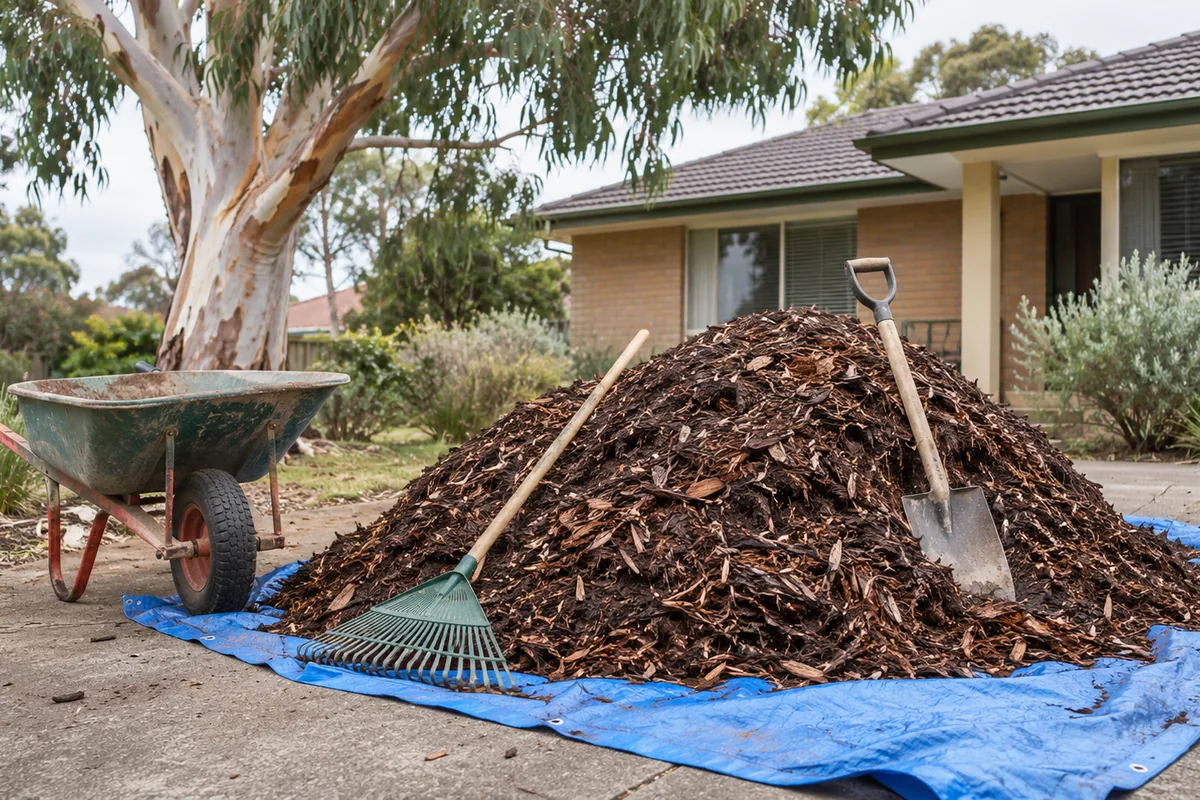
A pile of mulch on a driveway is easy to order and slow to move. A little planning stops it spoiling the lawn or washing into the street.
- Lay a tarp where the load will tip.
- Keep the pile off the footpath and away from stormwater drains.
- Have the wheelbarrow, a rake and a shovel ready before the truck arrives.
- Move the pile within a few days. Rain on a mulch heap can make it heavy and sour.
- Cover leftover mulch so it does not blow around.
Some of the spreading may be easier with help. Our page on landscape design and construction explains how beds are laid out and finished when the job is larger than a weekend of work.
What happens when you enquire?
- You tell us the suburb, the beds you have in mind and attach a few photos.
- We ask about drainage, watering and what is already planted.
- You receive a written list of the work so you can compare it with other quotes.
Common questions
How often does mulch need topping up?
Bunnings advises reapplying organic mulch every year to keep it at the right depth. Check the bed each spring and add enough to restore the layer, rather than laying a full new layer on top of old mulch.
Does mulch use up nitrogen from the soil?
Bunnings notes that wood waste and bark break down slowly but are low in nitrogen, and suggests adding a plant food such as blood and bone before laying them. Ask your supplier whether the product is aged.
Can I lay weed mat under mulch?
Yes, and some people do on paths. Bunnings says cheaper fabrics can let weeds through and dearer ones last longer, and that mat should be covered with mulch. In beds where plants spread by runners, weed mat can get in the way.
Should I use stone mulch near the house?
Stone adds no organic matter, which suits paths, pots and feature areas. If you are in a bushfire area, check current CFA advice on mulch near buildings before choosing.
How do I stop mulch washing onto paths?
Keep the depth sensible, finish the bed edge a little below the path or lawn, and avoid very fine bark on slopes. Heavier chips stay put better than light material.
What to do next
- Measure each bed and write down the areas.
- Pick the material for each bed using the table above.
- Work out cubic metres using the coverage table, then add a little for settling.
- Ask the supplier for the depth they recommend and the way they measure a load.
- Clear weeds and water the bed before the delivery arrives.
Want the beds sorted by someone else?
If the job is bigger than a weekend, tell us what you want kept, what you want replaced and what is not working, and we will price it in writing.
Sources checked 15 November 2026: Bunnings mulch advice and South East Water watering rules.