
Artificial grass installation in Pakenham: what to check before you book
Most of the work in a 30 square metre artificial lawn happens below the surface, where nobody looks afterwards. This guide covers the base, drainage, edges and summer heat, and lists the details to get in writing before anyone digs up your yard in Pakenham, Officer or Beaconsfield.
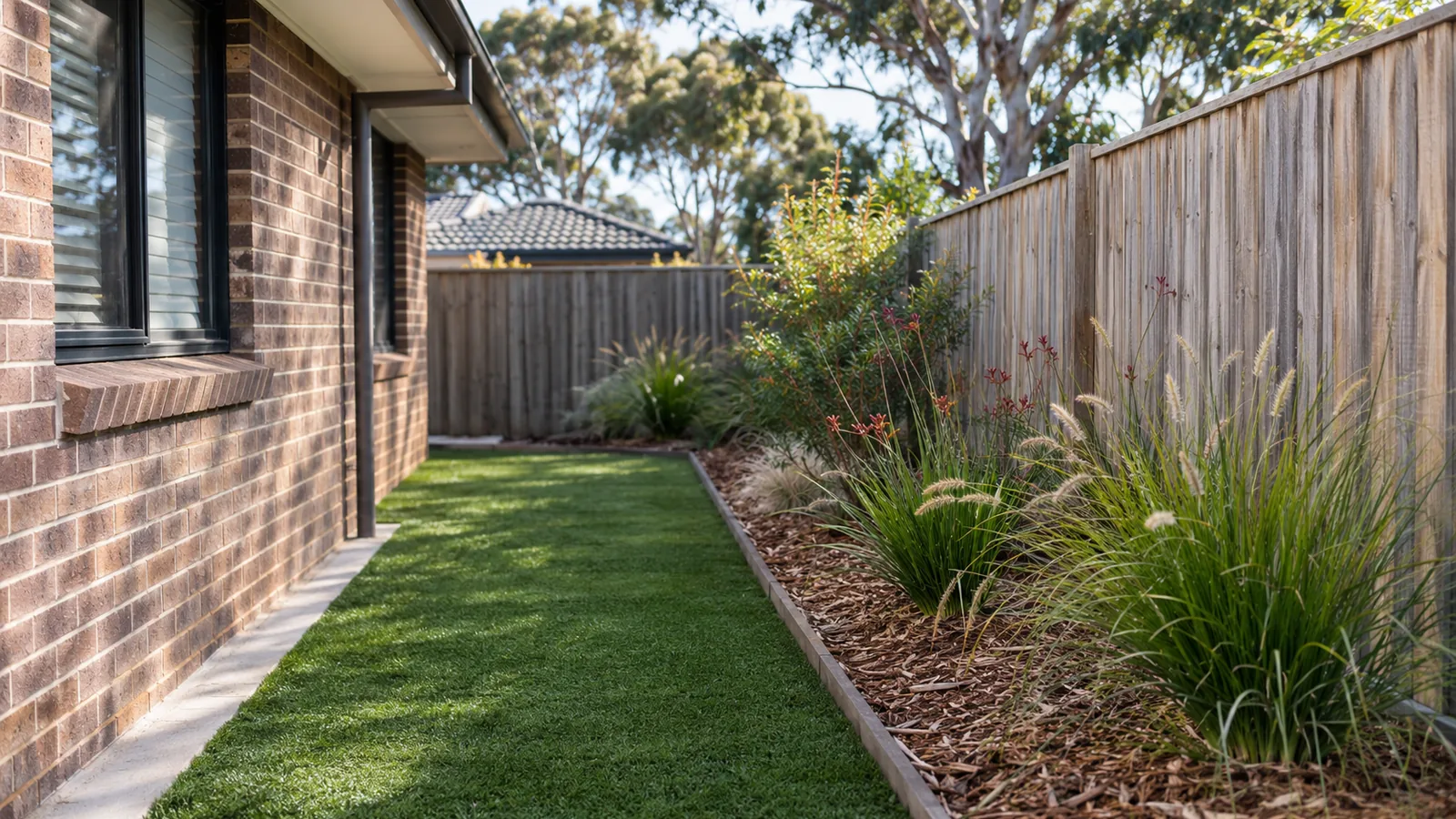
Artificial grass only performs as well as the base under it. Ask for the dig depth, base material, fall direction, edge detail and join method in writing.
In full summer sun the surface runs much hotter than natural lawn, so it suits shaded corners, play areas and pet runs better than a whole open yard. For costs, see the pricing page.
How is artificial grass installed on a Pakenham block?
The order of work is the same on most yards, whatever the product. Skipping a step usually shows up a season later as a dip, a puddle or a lifted edge.
- Mark out and check services. Mark the area with paint or string. Before anything is dug, request plans of underground pipes and cables from Before You Dig Australia, which lists plans as free.
- Dig out the old surface. Lawn, roots and the top layer of soil come out so the new base sits on firm ground rather than on organic matter that rots and settles.
- Lay a weed membrane. A woven fabric goes over the prepared ground to keep weeds and soil from mixing into the base.
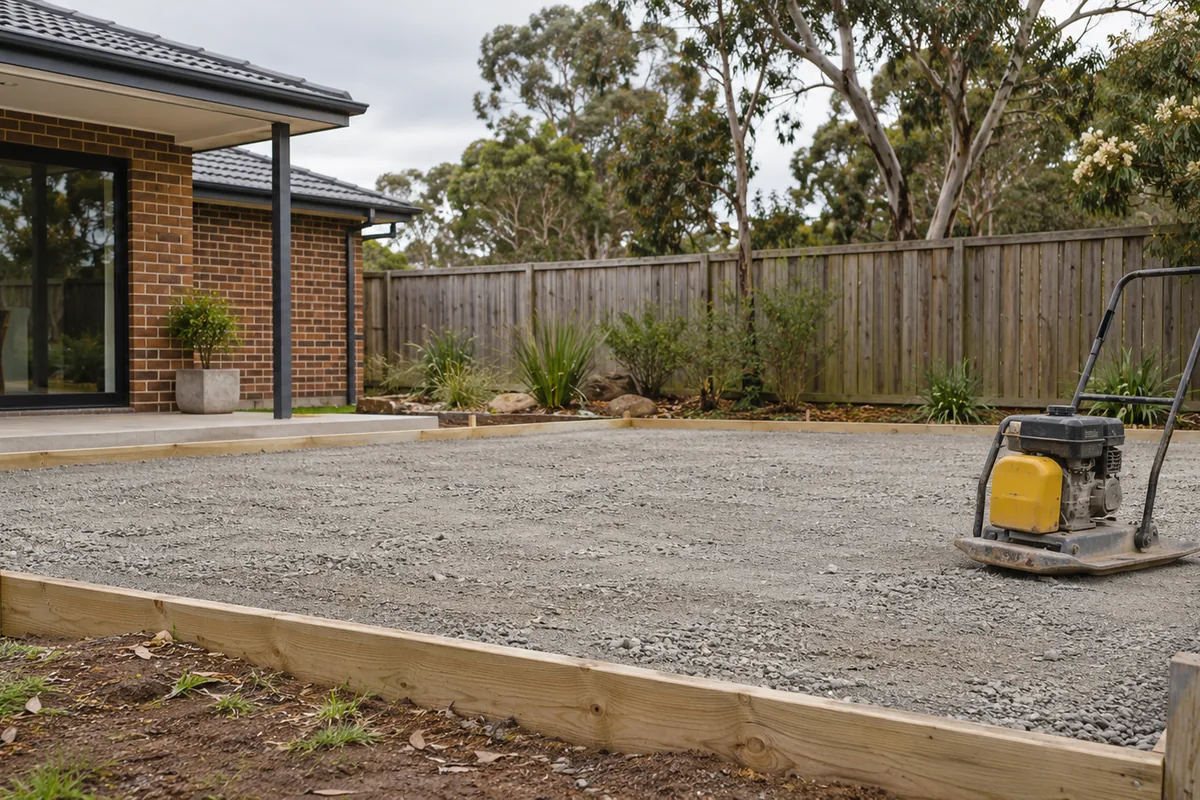
- Build the base in layers. Crushed rock goes in and is compacted with a plate compactor in layers, not tipped in one go.
- Screed a fine top layer. A thin layer of fine crushed material is raked to the final shape with a gentle fall so rain moves in one direction.
- Lay and cut the grass. Rolls are laid with the pile running the same way, joined with tape and glue, then trimmed to the edges.
- Fix the edges and finish. Edges are pinned or fixed to a border, infill is spread if the product calls for it, and the surface is brushed up.
Not every installer uses every step in this order, and some products need an extra layer. That is why the written scope matters more than the sample in the showroom.
Why does the base matter more than the grass?
The grass is a thin carpet. It follows whatever is underneath it, including every soft spot and every hollow.
If your soil is clay, water drains slowly and sits in the ground after rain. A base built too thin or too flat on clay can hold that water against the back of the grass, which leads to damp patches, smell and uneven settling. A simple check is to dig a small hole, fill it with water and see how long it takes to empty. If it is still full the next morning, tell the installer before they quote.
Compaction is the other half. Crushed rock that has been walked on and raked is not compacted. A plate compactor, run over each layer, is what stops the surface from sinking where the kids run or the dog turns.
Think about where the water goes. The surface should fall away from the house and from your neighbour's fence. The same thinking applies to garden beds, which is covered in our guide to the garden bed setback from the slab.
Which parts of the yard suit artificial grass?
Artificial grass makes most sense where real lawn struggles or where you want a clean, flat surface all year.
| Area | Fit | Reason |
|---|---|---|
| Deep shade side passage | Good | Real grass thins out with little sun |
| Dog run | Good | Free draining and easy to rinse |
| Play area | Good | Flat and clean, no mud in winter |
| Small courtyard | Good | No mower needed |
| Open north-facing lawn | Think twice | Full sun makes the surface hot |
| Under mature trees | Check first | Leaves, roots and sap need a plan |
Many owners in Officer and Cardinia Lakes keep a real lawn for the open area and add artificial grass to the problem corners. Our page on artificial turf in Pakenham covers the service, and the comparison of synthetic turf and natural lawn goes through the trade-offs.
Size and shape change the job. A long thin passage means a lot of edges to cut and fix. A wide square yard means fewer joins. Estates around Officer, Pakenham and Beaconsfield often have both within one block, so measure each area separately.
How hot does artificial grass get in summer?
Hotter than real grass, and by a lot on a clear day. A University of Florida researcher quoted by UF/IFAS said artificial turf surfaces can reach about 79 degrees Celsius on the hottest summer days, while natural turf stayed near 39 degrees. Aerial imaging from the same team in California found natural turf often more than 10 degrees cooler than artificial surfaces.
Those figures come from overseas stadiums and city mapping, so Pakenham readings will differ. The direction is what counts: bare feet and paws on a sunny afternoon are at risk.
- Put a sample out in the sun on a warm afternoon and lay your hand on it.
- Favour shaded or part-shaded areas for pets and young children.
- Ask about products marketed as cooler, and ask what the supplier measured and where.
- Rinse the surface with water to cool it, remembering the South East Water rules allow hand watering with a trigger nozzle at any time.
Weighing up a synthetic lawn for one corner of the yard?
Send photos of the area and a rough measurement. We can talk through the base, the fall and which section suits artificial grass.
How do pets, play and cleaning work on artificial grass?
Dogs and children are the main reason people choose artificial grass. It stays clean in winter and does not turn to mud around the back door.
Urine and dirt still need attention. A free-draining base lets liquid pass through, but the surface and infill can hold smell if they are never rinsed. Pick up solids as you would on a normal lawn, rinse the area regularly and brush the pile up now and then.
Ask the installer which infill, if any, they use and whether it suits pets. Some products need none. Ask also for the manufacturer's care sheet, so you are not guessing about cleaners.
What should a written quote list?
A fair quote reads like a recipe. If a line is missing, ask for it. If two quotes list different things, you are comparing different jobs.
- The measured area of each section, in square metres, with a sketch.
- How deep the old surface will be dug out and where the spoil goes.
- The base material, the number of layers and how each one is compacted.
- Whether a weed membrane is used and over what area.
- The direction of fall, and where water leaves the area.
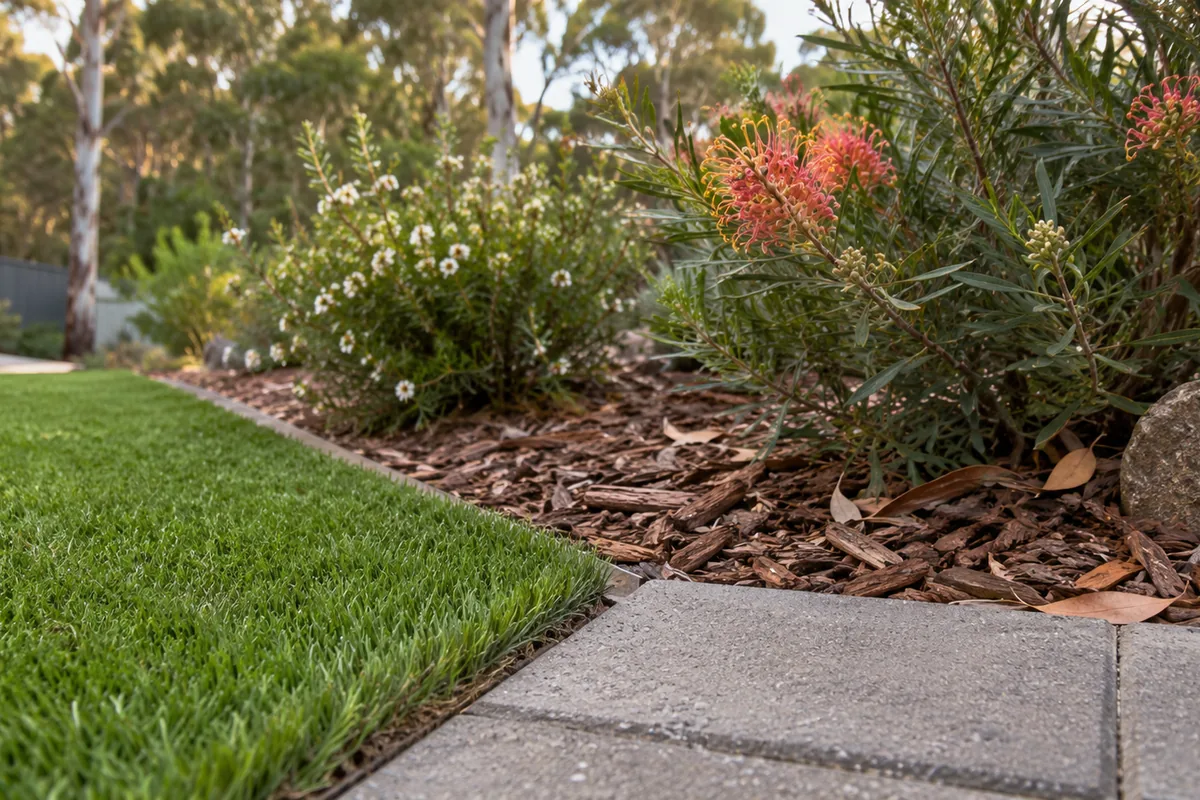
- The edge detail: border type, fixing method and finish against fences, paths and garden beds.
- The product name, pile height and the manufacturer's warranty document.
- How joins are made and where they will fall.
- Who checks underground services before digging.
- What is excluded, such as moving sheds, removing tree roots or fixing sprinklers.
If sprinklers run through the area, ask who caps them off so they do not leak under the base. Our irrigation page explains how that side of the job works.
What happens when you enquire?
- You send your address, the size of the area and a few photos, using the quote page or by phone.
- Someone asks about shade, pets, existing sprinklers and what lies under the lawn now.
- You receive a written scope that you can compare against any other quote.
Common questions
Does artificial grass need a base on clay soil?
Yes. The grass sits on whatever is below it, so a compacted crushed rock base is what keeps the surface flat and lets water pass through. Clay drains slowly, so ask the installer how they plan the base and the fall on your block.
Can artificial grass go straight over my existing lawn?
It is not good practice. Living grass and roots break down and settle, which leaves soft spots and dips under the surface. Most installers remove the old lawn and build a base first.
Do I still need to water artificial grass?
Not to keep it alive. You may rinse it to wash off dirt, urine and pollen, or to cool the surface on a hot day, and hand watering is allowed at any time under the South East Water rules.
Is artificial grass hot for dogs and kids?
It can be. Research reported by UF/IFAS shows artificial surfaces running far hotter than natural turf in direct sun. Shaded areas are safer, and a test with your own hand on a sample tells you a lot.
How long does an installation take?
It depends on the area, access, the depth of the dig and the weather. Ask for an expected start and finish window in the written scope, and confirm what happens if rain stops the base work.
What to do next
- Measure each area you are considering and take photos from two angles.
- Note where water sits after rain and where sprinklers run.
- Request underground service plans if any digging is planned.
- Ask each installer for the written scope using the quote checklist above.
- Compare the scopes line by line before you compare totals.
Ready to price a synthetic area?
Tell us the suburb, the area and what the space is used for, and we will come back with questions rather than a standard answer.
Sources checked 15 November 2026: UF/IFAS news on artificial turf surface temperatures, Before You Dig Australia and South East Water watering rules.