
Choosing a landscaper in Pakenham: a quote checklist
Three quotes for one yard can read like three different jobs. This checklist helps you line them up: what the scope should name, 10 questions worth asking on site, and which parts of a job need a licensed trade before you sign anything.
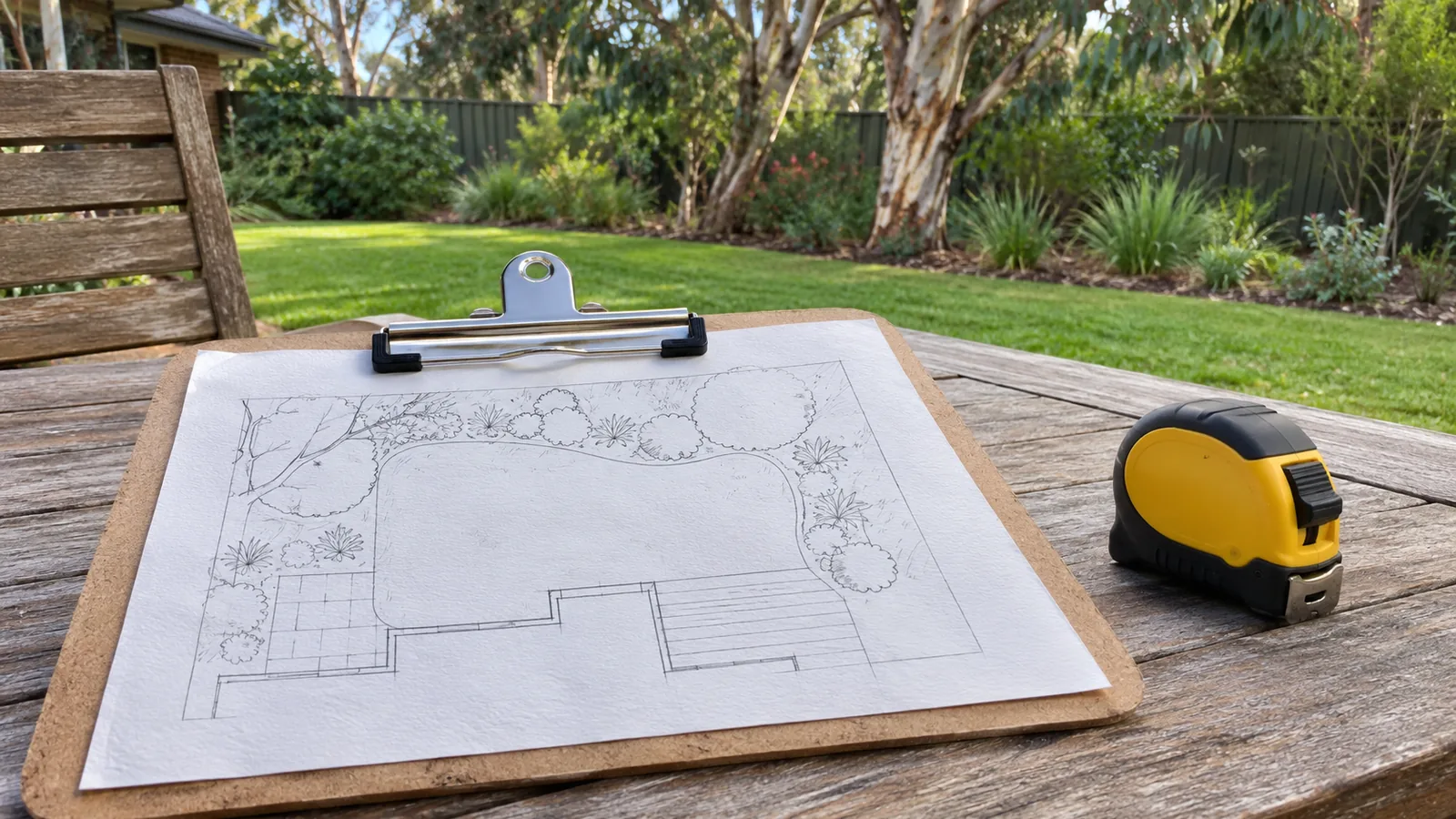
Compare scopes before totals. A good quote names the area, the materials, the steps, the exclusions and the payment stages.
Ask who does any plumbing, electrical or structural work, and ask to see their licence or approval details. Keep notes of every answer so you can compare them side by side.
What should I prepare before I ask for quotes?
A landscaper can quote more accurately when you give them the same information you would want if you were pricing the job yourself. Quotes built on thin information tend to come back with large allowances.
- A rough sketch with measurements for each area.
- Photos from at least two angles of every area, including the fence lines.
- A list of what you want kept, such as a tree, a path or a shed.
- How the space is used: pets, children, entertaining or a garden you want to grow.
- Where the sprinklers, taps, drains and any gate access run.
- Your timing, and any dates that matter such as an event or a sale.
- A budget range you are comfortable sharing, if you have one. Our pricing page explains how prices are set out.
Before any digging, request plans of underground services from Before You Dig Australia, which lists plans as free. A landscaper may do this for you, so ask who is responsible.
What should a landscaping quote list?
A quote is more than a number. It should say what is being built, how, with what, and what is not included.
| Check | What to look for |
|---|---|
| Scope | Each area named, with measurements |
| Materials | Product names, not just types |
| Preparation | Removals, dig depths, spoil disposal |
| Exclusions | A list of what is not included |
| Stages | Steps in order, with payments tied to them |
| Changes | How extra work is agreed in writing |
| Clean-up | Who removes waste at the end |
If a line is missing, ask for it. If two quotes list different items, you are comparing different jobs. Put the quotes side by side in a simple table and fill in each row.
What questions should I ask on site?
A site visit is your chance to hear how the landscaper thinks. Plain answers and clear explanations matter more than a smooth sales pitch.
- Who will actually do the work, and who will be on site each day?
- What is the plan for water, and where will it run after rain?
- Which parts of the job need a permit, an engineer or a licensed trade, and who arranges them?
- Who checks underground services before digging?
- What is the plan if the ground is harder, wetter or rockier than expected?
- How will access, bins and neighbouring fences be protected?
- What is the expected start, and what could change it?
- How are payments staged, and what does each one cover?
- How do you handle a change to the plan once work has started?
- Can I see recent finished jobs and speak to a past client?
Ask for a certificate of currency for public liability insurance if the work is substantial. You can also ask for the licence number of any plumber or electrician who will be on site, and check it with the relevant regulator yourself.
Have a quote in hand that you want to understand?
Describe the yard and what the scope says. We can point out gaps to ask the other landscaper about, and tell you how we would approach it.
Which parts of a job might need another trade or approval?
Many landscape jobs are soft works such as turf, beds and planting. Others cross into regulated work, and the landscaper should be upfront about who is doing it.
- Connecting irrigation to mains water or changing plumbing.
- Garden lighting or anything wired to the mains power.
- Retaining walls, large decks and structures near boundaries.
- Work near a protected tree, which may need a council permit first.
- Drainage changes that affect your neighbour or the street.
Rules and thresholds change, and they depend on the site. Check with Cardinia Shire Council and your building surveyor, and ask the landscaper to put in writing which approvals they expect. Our pages on tree protection in Pakenham and landscape design and construction show how we describe these items.
For watering systems, ask how the controller will be set. South East Water says watering systems can only run between 6pm and 10am.
Should I do some of the work myself?
Some owners handle the finishing work, such as spreading mulch or laying a path, and leave the earthworks and structures to a trade. That can reduce the scope, but it needs to be agreed in writing so the landscaper knows where the job ends.
Our guide to DIY and professional landscaping in Pakenham looks at where owners usually save effort and where they run into trouble. If the beds are the part you plan to do, our mulch and garden soil buying guide helps you work out quantities.
If the lawn is part of the job, ask whether the quote includes turf, preparation, and a care sheet. Our lawn care guide shows what happens once the turf is down.
What are the warning signs in a quote?
No single point proves a quote is poor, but several together are worth a second conversation.
- The scope is a single line with a total.
- Materials are described as quality or premium with no product names.
- The payment schedule is unclear or front-loaded.
- Questions about permits and licences get a vague answer.
- There is no mention of drainage, access or underground services.
- You are pressed to sign on the spot.
A landscaper who answers these questions clearly, even when the answer is not what you hoped, is easier to work with than one who avoids them.
What happens when you enquire?
- You send your suburb, the areas involved and a few photos, through the quote page or by phone.
- We ask about access, services, drainage and what you want kept.
- You receive a written scope and the next steps, so you can compare it with the others.
Common questions
How many quotes should I get?
Two or three written quotes is a common approach. More than that can leave you with too many different scopes to compare. What matters is that each quote lists the same items.
Should I pay a deposit?
Ask what the deposit covers and when each payment falls due. Agree the payment stages in writing, and keep receipts. If you are unsure about the rules for your job, check with the relevant regulator.
What if the plan changes during the job?
Ask how changes are handled before work starts. A written note of each change, with the effect on the work and the cost, protects both sides.
Does every landscaping job need a permit?
No. Turf, beds and planting often need none, but structures, retaining walls, work near protected trees and some drainage changes may. Ask the landscaper to say in writing which approvals they expect, and check with the council.
Can I split the job into stages?
Yes, and many owners do. Start with earthworks and drainage, then add paving, planting and turf. Ask the landscaper how the order affects access and the cost of coming back.
What to do next
- Draw a sketch with measurements and take photos of each area.
- Request underground service plans if any digging is planned.
- Book two or three site visits and ask each person the same questions.
- Fill in the quote table for each scope.
- Pick on the clearest scope, not the shortest one.
Want a written scope to compare?
Tell us the suburb, the yard and what you want done, and we will respond with questions and a written scope.
Sources checked 15 November 2026: Before You Dig Australia and South East Water watering rules.