
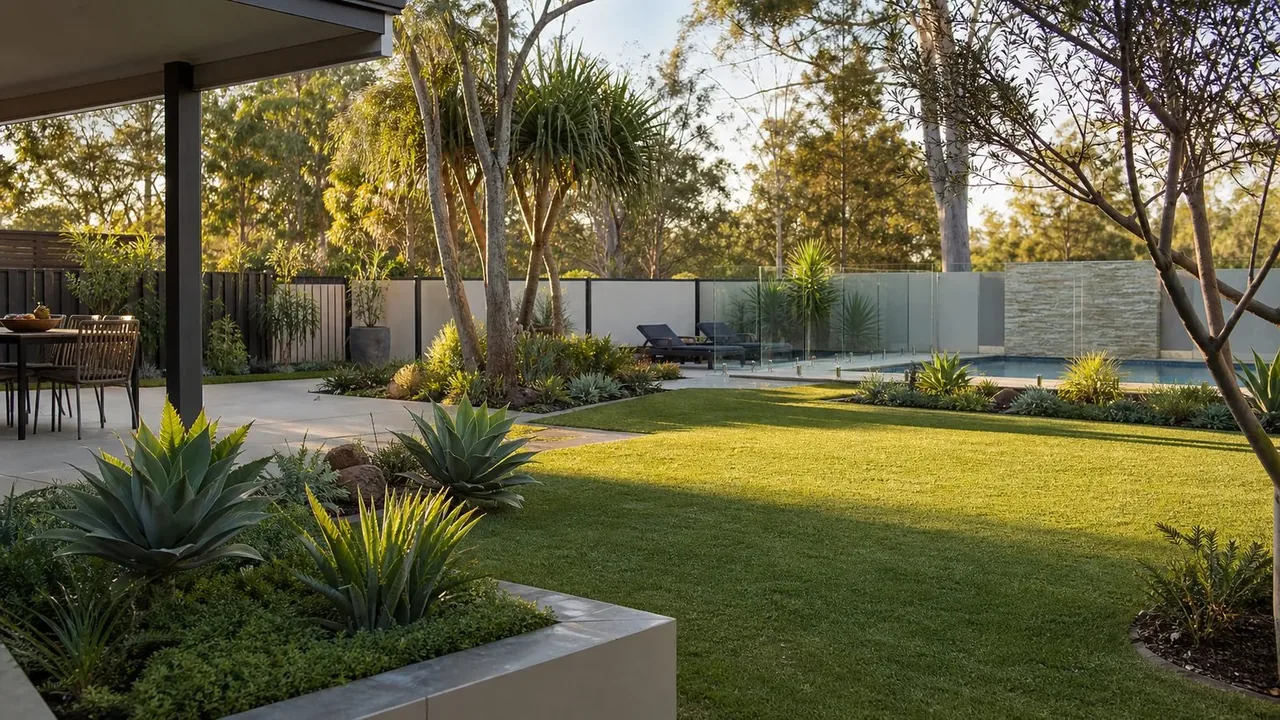
Make an inventory before making a demolition plan
Walk the garden with a plan and number the main elements: trees, shrubs, lawn areas, beds, paths, edging, irrigation stations and storage. For each, record what it does well, what causes trouble and what you do not yet know. A mature shrub may provide valuable privacy while an adjacent path makes access awkward. A lawn may look poor because its use has changed rather than because the whole garden needs replacing. Photograph from the house as well as from the boundary so the inventory captures the views you actually experience.
Use three temporary categories: keep, investigate and replace. The middle category matters because many expensive mistakes happen when an unknown is treated as a confirmed defect. Do not label every established plant as overgrown simply because the garden feels dated. Equally, do not retain a problematic feature solely because removing it feels wasteful. For a Pakenham household, the right outcome may be a mix of established structure and targeted changes. Record the reason for every proposed removal. That gives you a way to review the plan later and distinguish a necessary functional change from a preference that can remain optional.
Value mature planting without assuming it can be moved
Established plants can provide shade, shelter, privacy and a sense of enclosure that small replacement stock will not immediately reproduce. Assess those functions before deciding what goes. Identify plants reliably and ask for a health and suitability assessment where their condition is uncertain. Record whether each plant still fits the available space, whether it obstructs a route and how it interacts with nearby structures or services. Tree work and significant root disturbance need appropriate specialist assessment; a general garden renovation plan should not treat them as incidental demolition.
Retaining a plant also means protecting its growing conditions during the work. Ask how access, storage and excavation will avoid damaging the retained area. A plan that says 'keep tree' while routing machinery and soil stockpiles around its base is incomplete. Moving an established plant is not a guaranteed way to preserve it either. Suitability depends on the species, size, condition and practical handling requirements. Compare retention in place, assessed relocation and replacement as separate options with uncertainty stated. Avoid promises of survival that ignore these factors. Where a sentimental plant is involved, explain that priority early so the design can consider it before the construction route is fixed.
Judge paths and edging by their role in the new layout
An existing path may be structurally serviceable yet lead to a place you no longer use. Another may look unfashionable but provide the best route between the house and shed. Test the proposed layout with ordinary tasks before deciding to remove either. Check turns, gates and the movement of bins or garden equipment. Record unevenness, loose units and surface water behaviour for assessment. Do not assume a pressure clean will correct movement or drainage. Appearance, usability and underlying condition are different questions and should appear separately in the renovation brief.
Salvaging materials can be worthwhile when there is enough usable stock and a realistic destination for it. Count and inspect a representative selection before designing around reuse. Matching old material with new may be difficult, and lifting can reveal damage that was not visible in place. Ask who will sort, store and handle salvaged items and what happens if the usable quantity is lower than expected. Keeping a small sample for repairs may be more useful than trying to force every old paver into the redesign. The decision should include labour, storage and final function, not just the appeal of saying that nothing was discarded.
Assess soil and irrigation as assets with unknowns
Existing soil is not automatically waste, but it is not automatically suitable for every new planting area either. Record previous use, visible rubble, weed problems and areas that behave differently after rain. Ask what assessment supports retaining, improving or replacing material. Keep suspect or unidentified material separate and seek appropriate advice rather than spreading it across the site. A delivery of fresh soil does not resolve poor levels or an external water source. The brief should explain what growing condition the proposed soil work is intended to achieve.
Map visible irrigation and find out which stations serve the areas being retained. A functioning controller does not prove that concealed pipework fits the new design. Conversely, removing every component can discard useful infrastructure. Ask for a reuse assessment that distinguishes known working parts, parts requiring testing and parts incompatible with the revised planting. Record any concealed routes discovered during work before they are covered again. If a new path crosses an existing line, settle that interface before the path is finished. Coordinating those decisions is often more useful than choosing a new controller or a decorative mulch before understanding what is already beneath the garden.
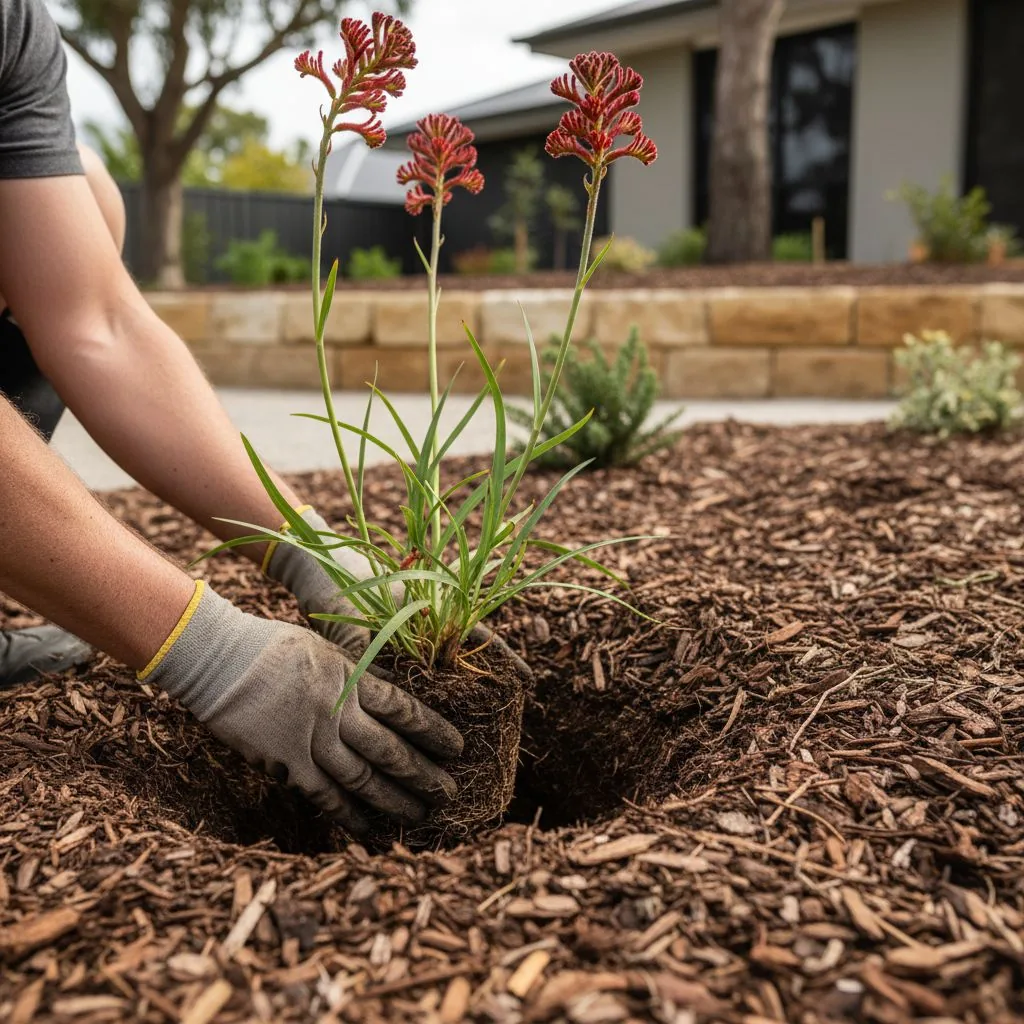
Set the work sequence around what remains
A renovation differs from a blank-site build because people and retained garden elements remain in the way of construction. Plan the access route, temporary storage and working zones before ordering materials. State which doors, paths and service points must remain usable. Protect retained areas in a way that matches the work and obtain specialist advice where roots or structures are involved. Temporary protection should not itself damage planting or trap water. Ask the contractor to explain how protection will be checked as the project progresses, especially if several trades use the same route.
Sequence disruptive work before final planting and lawn finishes, while allowing for the practical needs of retained plants. Do not assume that every garden element can wait until the end for water or access. If work is staged over separate visits, describe the safe and usable state between stages. An unfinished edge, exposed irrigation line or unstable material pile is not an acceptable everyday garden arrangement. Make the responsibility for temporary conditions explicit. Where a later stage depends on an untested existing component, keep that dependency visible in the plan. This reduces the chance that a finished area must be opened again because an earlier uncertainty was ignored.
A hypothetical renewal with selective reuse
Imagine an established Cardinia Lakes garden with a usable central lawn, mature screening and an awkward curved path. The owners initially propose removing everything to create a simpler layout. An inventory shows that the screening still performs an important privacy function and the lawn shape could work if the path moved. Some existing pavers appear suitable for a small service area, but their quantity and condition need checking after lifting. The irrigation layout is undocumented, so reuse remains provisional until the system is inspected.
In this hypothetical example, the design retains the main screen, simplifies the path and renews only the beds that conflict with daily use. The quote gives a separate allowance mechanism for handling uncertain salvaged material and describes the irrigation assessment before final construction. The retained screen preserves privacy while the new path improves access. Selective reuse still needs coordination. A retained hedge, relocated path and revised irrigation are connected decisions, even when they appear as different lines in the quote.
Avoid false economies and unnecessary replacement
Keeping an item because it is free can be expensive if it forces a poor layout or repeated repairs. Ask what work is needed to make the retained item fit for its new purpose. Conversely, replacing a serviceable element simply to make every surface match may add disruption without improving how the garden works. Compare those choices against the priorities recorded at the start. If easier maintenance is the goal, count the edges, awkward corners and access obstacles created by the proposed layout. A new garden can inherit the old workload even with entirely new materials.
Do not clear unknown plants before identification if retention is still being considered. Do not let machinery access decide removals by default when another route could be assessed. Avoid storing reusable materials where they block the work and are then damaged or discarded. Label retained and removable elements on a plan and confirm the markings on site before work begins. If an unexpected condition changes a decision, record the reason and agree the revised scope before proceeding. That small discipline protects against a chain of informal changes that leaves the household with a different garden from the one it thought it approved.
Ask for options that reveal the real trade-offs
Prepare an inventory with photos, your keep and investigate categories, and the functions that matter most. State any sentimental plants, privacy requirements and routes that cannot be lost. Ask for a base scope that meets those needs and separate options for cosmetic changes. Each reuse option should identify inspection, lifting, storage and reinstatement responsibilities. Each replacement option should explain removal, disposal and the conditions needed for the new work. This structure makes quotes easier to compare because a lower total cannot quietly omit the preparation that another proposal includes.
At handover, walk through the retained elements as carefully as the new ones. Confirm they remain accessible and that their care has been explained. Keep plant names, product information and records of concealed irrigation together with the final plan. Photograph the garden from the same viewpoints used in the inventory. Some benefits, such as plant establishment, take time to assess; others, such as a usable path and preserved privacy, can be checked immediately. The goal is a garden with a clear reason for what stayed and what changed. A selective renovation works best when those decisions are evidence-based and the interfaces between old and new are designed rather than improvised.