
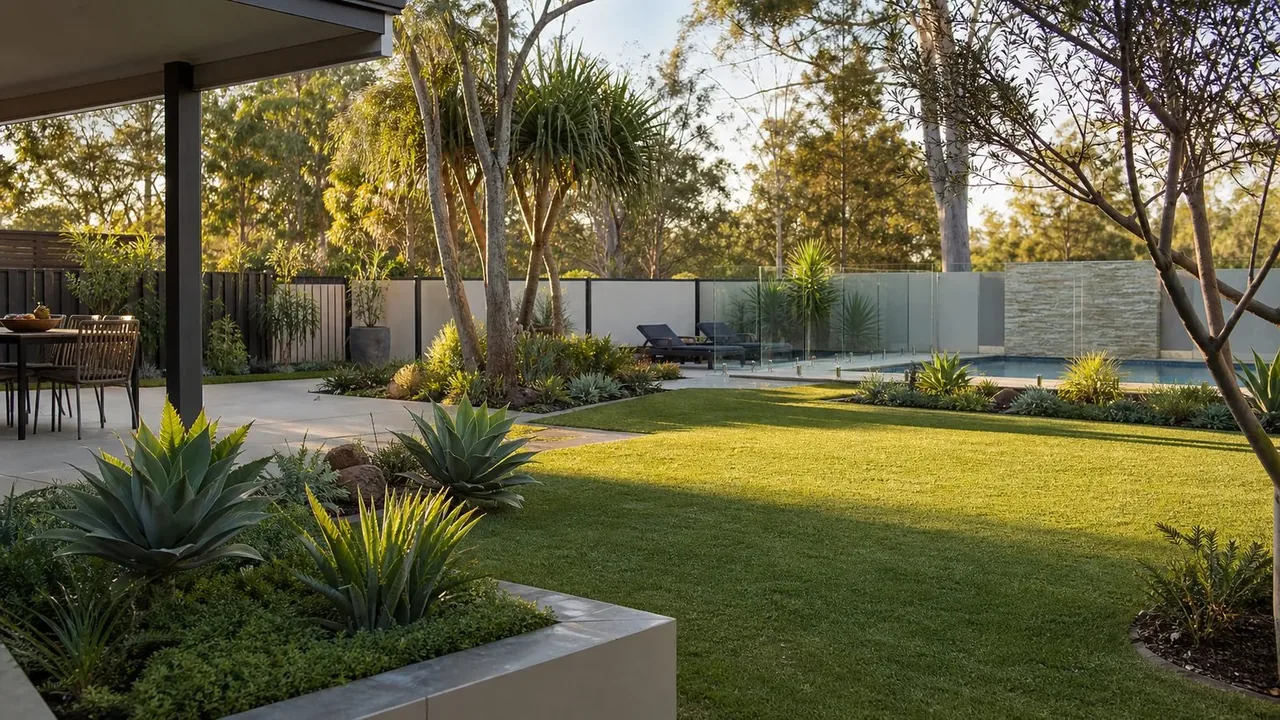
Start with the privacy you actually use
Stand where you spend time before you stand beside the hedge. A kitchen window, outdoor table and bedroom may each need a different section of screening. Mark the sightlines on a rough plan, including views that only occur when someone is standing on a neighbouring deck. A hedge that seems too tall from the lawn may be doing useful work from inside the house. Conversely, a tall hedge might leave the important lower view completely exposed. Photograph those views from your property without intruding on anyone else's privacy.
Write down what is wrong in functional terms. 'Too big' might mean branches brush the washing, the path is difficult to use, a mower cannot turn, or the hedge shades a vegetable bed. Each problem suggests a different response. Reducing the height will not necessarily recover width at ground level. Removing the end plant might improve access while keeping the main screen. For an established Beaconsfield or Pakenham garden, these small distinctions can determine whether a large removal is worthwhile. Do not choose a final hedge height until you understand the views, usable space and ongoing reach needed for maintenance.
Identify the plants before specifying a hard cut
Get a reliable identification of every plant type in the hedge, not simply the name used by a previous owner. Mixed replacements can look similar when clipped. Take clear pictures of foliage, stems, the whole plant and any flowers or fruit. A nursery or horticulturist can help resolve uncertainty. Record whether the hedge is mostly leafy near the outside and bare inside, whether bare areas are shaded, and whether individual plants differ markedly from their neighbours. These observations are more useful than describing the whole line as unhealthy.
Species response matters because old stems do not all produce new shoots after a severe reduction. The Royal Horticultural Society's hedge renovation guidance warns that most conifers do not respond well to cutting into old wood. That is a reason to identify the plant first, not a reason to assume every evergreen must be removed. Ask the person assessing the hedge to explain the likely regrowth zone and where proposed cuts sit relative to it. If the answer is uncertain, keep the first intervention modest and observable. A hedge clipper cannot put foliage back on a bare stem after an unsuitable cut.
Separate pruning problems from growing problems
A hedge may be uneven because it has been cut unevenly, but it may also have unequal access to light, water or root space. Look along the bed for a downpipe discharge, a constantly damp end, roots crowded against paving, or a dry pocket beneath an overhang. Compare irrigation delivery at a strong plant and a weak one. Do not assume that a controller running means water reaches every root area. Record whether the problem affects one plant, every second plant, the lower face or the whole line. The pattern helps narrow the investigation.
Keep the observations non-destructive. Do not dig around structural roots, open electrical irrigation equipment or apply a treatment based solely on a photograph. If foliage has suddenly changed, take close photographs and seek a diagnosis before pruning away all the evidence. A replacement planted into the same unresolved wet pocket may repeat the failure. Likewise, more fertiliser will not create room in a narrow bed. Your renovation brief should separate the plant health assessment from the cosmetic cutting, with any bed or irrigation repair described as its own task. This makes it easier to compare proposed remedies and avoid paying twice for the same area.
Compare retention, staged reduction and replacement
Retention suits a hedge that performs its screening job and mainly needs manageable access or a more consistent outline. Ask for a maintenance envelope showing the future face and top, plus enough working space to reach them. Staged reduction may suit identified plants that tolerate it when the owner can accept a temporary uneven appearance. The sequence should explain which side changes first, how recovery will be assessed and what would stop the next cut. It should not promise a particular recovery date without considering the plants and conditions.
Replacement makes more sense when the hedge cannot fit the available space, its useful foliage cannot be retained at the desired size, or too many plants are beyond practical recovery. Plan the transition before removal. Temporary privacy, access for root removal, soil preparation and water for new stock are separate parts of the job. Replacing only isolated gaps can work, but a small plant between established neighbours faces different conditions from a plant in an empty bed. Ask how competing roots, shade and watering will be handled. Compare a repaired hedge with an entirely new line on their future maintenance demands, not just the appearance on installation day.
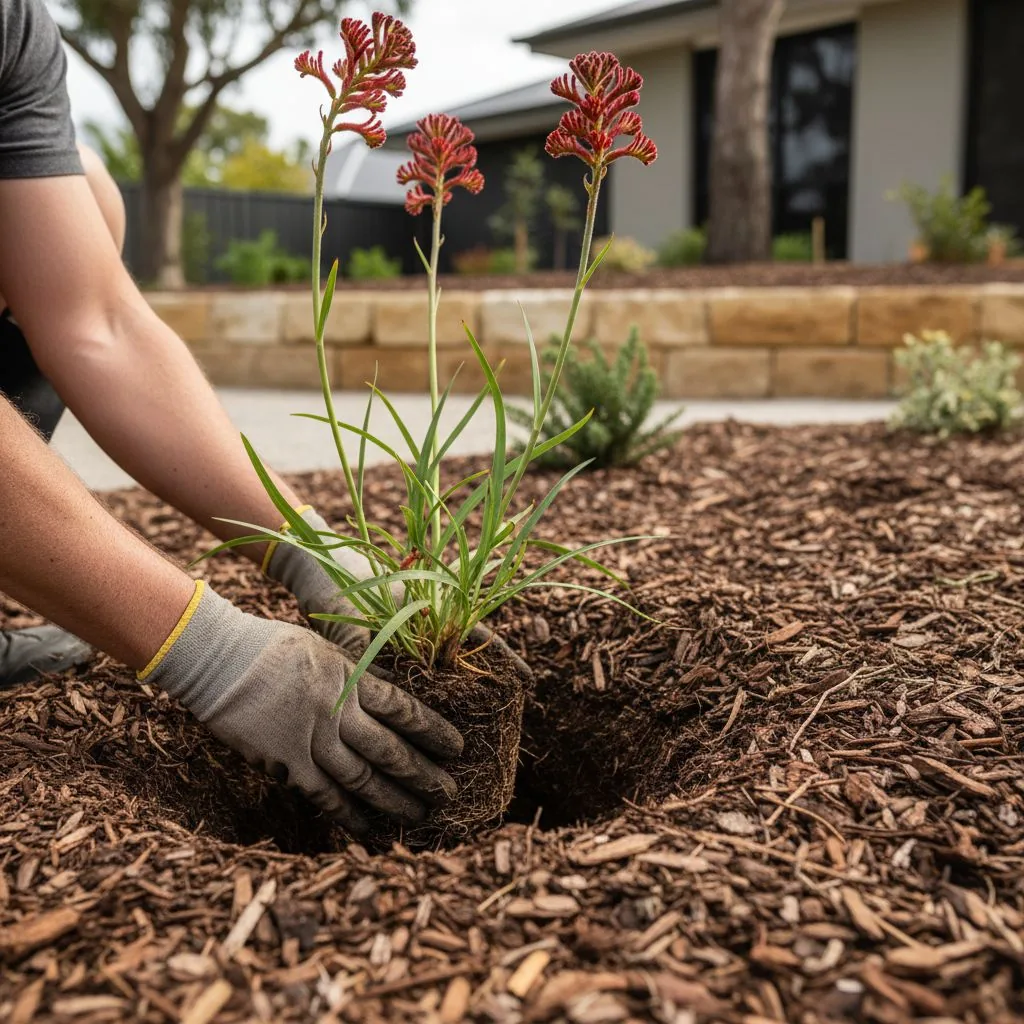
Choose the replacement around its mature dimensions
A plant label's mature width is a planning input, not a suggestion to squeeze the plant into whatever space remains. Work backwards from the clear path, fence access and sitting area you want to keep. Then consider what planting volume remains. If the bed is too narrow for a substantial hedge, a lower planting layer and a separately assessed screening solution may be more realistic. Do not treat a fast growth description as proof of suitability. Faster extension can also mean more frequent trimming to hold the same shape.
Ask for botanical names, the proposed spacing and the reason each plant suits the actual light and moisture pattern. A sunny front boundary and a shaded side boundary on the same Pakenham property should not automatically receive identical plants. Check leaf litter, fruit, prickly foliage and any pet concerns before ordering. Choose stock sizes based on establishment and handling as well as immediate privacy. Larger plants still need root conditions and aftercare that suit them. Request a plan for access to irrigation and future pruning, because a dense screen that hides every maintenance point can turn simple repairs into difficult work later.
A hypothetical staged renovation
Imagine a Pakenham household with a broad hedge beside an outdoor dining area. The owners initially ask for the whole hedge to be removed because chairs catch on foliage. A site discussion shows that only the section beside the table is intrusive, while the far end screens a living room. The plants are identified and assessed before deciding whether selective reduction is possible. The owners mark the clearance they need with movable chairs, keeping the actual sitting arrangement in place. This reveals that moving the table slightly could preserve more foliage than the first sketch suggested.
In this hypothetical example, the quote separates selective pruning, an irrigation check and replacement of a single failed plant. It also offers complete replacement as an alternative, including the period of reduced privacy. The family chooses only after seeing the different consequences. The order of decisions matters: define the access problem, check plant response, inspect growing conditions, then price the options. A contractor should be able to explain why the proposed work addresses your particular problem rather than simply giving a rate for cutting everything to the same outline.
Common renovation mistakes and better remedies
The most expensive mistake is agreeing to a finish line before checking whether living foliage will remain there. The remedy is a marked proposal and a discussion of regrowth, including any bare areas that may persist. Another mistake is keeping a hedge solely because it already exists even when it blocks essential access. Measure the space you need for the bin, mower or normal walking route and treat that as a design requirement. Do not let a neat drawing conceal an awkward daily task. A narrower plant choice may be preferable to repeated aggressive pruning.
Avoid treating every brown section as a watering shortage. Record moisture and delivery first, particularly where the rest of the hedge is healthy. Avoid filling a gap with the nearest available plant without checking compatibility and mature shape. Where identification or health remains uncertain, label that uncertainty in the quote. Confirm responsibility for removing clippings and any unwanted regrowth, protecting nearby planting, and cleaning the working route. Tall or difficult access work needs a suitable contractor and equipment assessment. Do not improvise work from unstable ladders or cut close to overhead services while trying to save the hedge.
Prepare a brief that can be priced clearly
Your brief should include photographs from both ends, the views that need privacy, an approximate length and the access route from the street. Mark plants or sections you want retained and list the maximum disruption you can accept. Explain whether you can tolerate temporary gaps, whether pets use the bed and whether there is room to store clippings during the work. Separate your desired outcome from your preferred method. 'Recover a clear route to the clothesline while keeping the bedroom screened' gives an assessor more useful information than 'cut everything back hard'.
Ask the quote to distinguish pruning, removal, bed remediation, supply of replacement plants and establishment care. Record assumptions about hidden roots and irrigation so unexpected conditions do not silently change the scope. At handover, photograph the retained hedge and receive a simple explanation of what to monitor before further cutting. Keep the botanical names and any product information with the garden records. Success is a hedge that fits the space and can be maintained without repeating the original problem. Its appearance may change gradually; the agreed functional improvements should be clear enough to check with the same photos and measurements used at the start.